Newton's Ring Experiment Microscope Manufacturer,Supplier and Exporter in India
Product Code : EL-O-11038
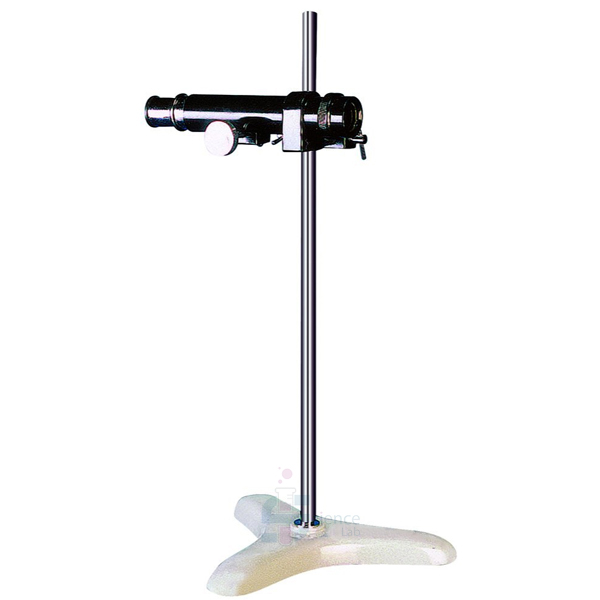
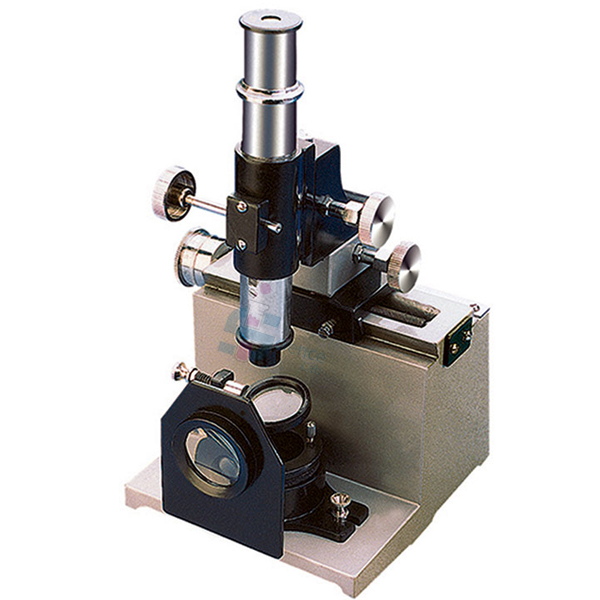
Quick Answer: The Newton's Ring Experiment Microscope is the measuring microscope of a Newton's rings apparatus: it has a 0.001 cm vernier constant, an achromatic objective and a cast-iron bed, and is used to find the wavelength of light and the radius of curvature of a lens.
Last updated: October 2026
Key Features
- Vernier constant of 0.001 cm for fringe measurement
- Achromatic objective with rack and pinion focusing
- 170 mm (17 cm) stainless steel measurement scale
- Traverse range of approximately 30 mm in a single traverse
- Slow-motion carriage for fine adjustment
- Machined cast-iron bed with V-guide ways
Technical Specifications
| Specification | Value |
|---|---|
| Bed | CNC-machined cast iron |
| Scale and vernier | Stainless steel |
| Optical system | Achromatic objective, rack and pinion focusing |
| Vernier constant | 0.001 cm |
| Measurement scale | 170 mm (17 cm) |
| Traverse range | Approximately 30 mm (3 cm) in a single traverse |
| Mechanical drive | Slow-motion carriage for micro-adjustment |
| Guide ways | Machined V-guide ways |
About This Product
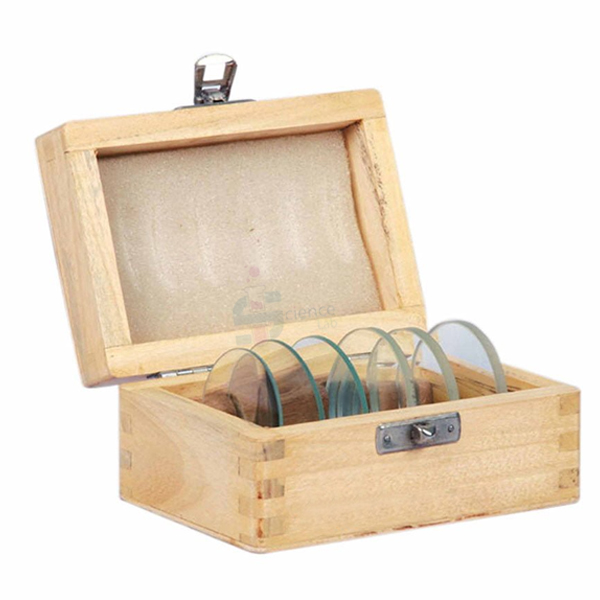
In a Newton's rings experiment the microscope is moved across the ring pattern to read the fringe diameters, and the 0.001 cm vernier sets the reading resolution. The achromatic objective shows the interference fringes without colour fringing, while the cast-iron bed, V-guide ways and slow-motion carriage keep the traverse steady. The matching Newton's Ring Lens Set is listed separately in the Optics range. Science Lab Export can ship the Newton's Ring Experiment Microscope to buyers in Oman, Mali, Mozambique, Bangladesh and the United Arab Emirates.
Frequently Asked Questions
What can be measured with the Newton's Ring Experiment Microscope?
It is used to determine the wavelength of light and the radius of curvature of a lens from the diameters of Newton's rings, read on a vernier with a constant of 0.001 cm.
How far does the microscope travel?
The traverse range is approximately 30 mm (3 cm) in a single traverse, on a 170 mm stainless steel scale.
What is the bed made of?
The bed is CNC-machined cast iron with machined V-guide ways, and the scale and vernier are stainless steel.
Related: Optics, Newton’s Ring Lens Set, Vernier Microscope (Six Position Microscope), Optical Bench, Metal and Advanced Physics.
For a quotation on the Newton's Ring Experiment Microscope, contact Science Lab Export.